
Tallahatchie Court Record Access Matrix
The Tallahatchie County matrix sorts records several ways. It separates the record layer, the court, the district, and the clerk who answers. It also shows the route each request takes. Keep in mind that a docket sheet, a document copy, and a certified copy are three different asks, even for one Tallahatchie County case.
| Tallahatchie County record | Tallahatchie County court | Tallahatchie County district | Tallahatchie County custodian | Tallahatchie County route |
|---|---|---|---|---|
| Tallahatchie County general docket | Tallahatchie County Circuit Court | Tallahatchie County Charleston | Tallahatchie County Circuit Clerk | Tallahatchie County MEC or counter |
| Tallahatchie County general docket | Tallahatchie County Circuit Court | Tallahatchie County Sumner | Tallahatchie County Circuit Clerk | Tallahatchie County MEC or counter |
| Tallahatchie County civil document | Tallahatchie County Circuit Court | Tallahatchie County Charleston | Tallahatchie County Circuit Clerk | Tallahatchie County copy request |
| Tallahatchie County civil document | Tallahatchie County Circuit Court | Tallahatchie County Sumner | Tallahatchie County Circuit Clerk | Tallahatchie County copy request |
| Tallahatchie County estate record | Tallahatchie County Chancery Court | Tallahatchie County Charleston | Tallahatchie County Chancery Clerk | Tallahatchie County MEC or counter |
| Tallahatchie County estate record | Tallahatchie County Chancery Court | Tallahatchie County Sumner | Tallahatchie County Chancery Clerk | Tallahatchie County MEC or counter |
| Tallahatchie County domestic record | Tallahatchie County Chancery Court | Tallahatchie County Charleston | Tallahatchie County Chancery Clerk | Tallahatchie County public route |
| Tallahatchie County domestic record | Tallahatchie County Chancery Court | Tallahatchie County Sumner | Tallahatchie County Chancery Clerk | Tallahatchie County public route |
| Tallahatchie County Justice file | Tallahatchie County Justice Court | Tallahatchie County District 1 | Tallahatchie County Justice clerk | Tallahatchie County local request |
| Tallahatchie County Justice file | Tallahatchie County Justice Court | Tallahatchie County District 2 | Tallahatchie County Justice clerk | Tallahatchie County local request |
| Tallahatchie County municipal file | Tallahatchie County city court | Tallahatchie County issuing city | Tallahatchie County city clerk | Tallahatchie County city request |
| Tallahatchie County historic file | Tallahatchie County holding court | Tallahatchie County named district | Tallahatchie County clerk or MDAH | Tallahatchie County archive inquiry |
The matrix only routes a request. It decides nothing. Whether a Tallahatchie County record is public, redacted, sealed, certified, or archived is a call the court or clerk makes under the rules that apply.
Tallahatchie Court Record Request Path
The right request path depends on where the file now sits. A live Circuit or Chancery case may offer several routes. One is MEC/PAMEC, another a clerk counter, and another a written request. Justice Court and Municipal Court files usually run through the local clerk only. Older Circuit material may call for an MDAH or archive inquiry. Each route answers a different question, too. One tells you a case exists. Another shows what the docket holds. Another tells whether a document is public, and another explains how to order a certified copy.
Lead with the case number when you have it. Ask for a fee estimate before paying. Ask the clerk to tell a document copy from a docket printout. A clear Tallahatchie County request keeps a Chancery question from landing on the Circuit Clerk. It also keeps a town citation away from a county office.
How to Get Court Records
Start by matching the record to its court. Circuit Clerk Daphane B. Neal holds Circuit Court general civil and felony criminal records. That includes general docket entries, filed papers, orders, judgments, and lower-court appeals that reach Circuit Court. Chancery Clerk Anita M. Greenwood keeps the separate equity stream. That stream covers domestic, probate, estate, guardianship, and land matters. Justice Court and municipal clerks keep their own lower-court files. The county has two judicial districts, so name Charleston or Sumner in the request.
Each route serves a different purpose. For participating Circuit or Chancery cases, MEC with PAMEC offers remote account-based access. At the courthouse, ask the clerk about docket-sheet inspection. You can also ask about a public terminal, subject to current procedure. By phone, confirm which court and district holds the file. A written request should ask the clerk whether mail, email, fax, or another local method works. It should also cover what payment it takes and whether the file is archived. The county offers no online request form of its own. A municipal citation goes back to the issuing city. For old material, try the MDAH archive route along with the clerk.
- Identify the court, district, case number, and date range.
- Ask first for docket-sheet inspection if the request is broad.
- Name the precise document after locating its docket entry.
- Specify plain or certified copy and paper or electronic format.
- Confirm restrictions, fee estimate, payment method, postage, and turnaround before paying.
Tallahatchie Court Records by District
"Tallahatchie courthouse" is too vague for most requests. Circuit and Chancery records split between a First Judicial District in Charleston and a Second Judicial District in Sumner. The Circuit Clerk's First District contact is P.O. Box 86, Charleston, MS 38921, 662-647-8758, and the Second District contact is P.O. Box 96, Sumner, MS 38957, 662-375-8515. For the Chancery Clerk, the First District contact is P.O. Box 350, Charleston, MS 38921, 662-647-5551, and the Second District contact is P.O. Box 180, Sumner, MS 38957, 662-375-8731. Pick the right one before you send anything.
Choose the custodian before sending a request
Circuit Clerk: general civil, felony criminal, and Circuit appeals. Chancery Clerk: equity, domestic, probate, estates, guardianships, and land matters. Justice Court: District 1 Charleston clerk 662-647-3477 or District 2 Sumner clerk 662-375-9452. Municipal Court: city clerk or court named on the citation.
The official Chancery listings show weekday hours of 8:00 a.m. to 5:00 p.m. at 1 Court Square in Charleston and 100 North Court Street in Sumner. Circuit MEC information lists both Tallahatchie locations at 8:00 a.m. to 5:00 p.m. Call ahead to confirm current counter hours and closures before a visit.
Types of Court Records
A docket is just one layer of a court record. Think of it as a chronological index. It points you to the papers and events in a case. The file behind it may hold pleadings, process, orders, and exhibits. Transcripts, accounting material, and appellate papers may sit there too. Each layer carries its own access rule. So a public docket entry does not make every attachment a public, unredacted document.
| Record layer | What it generally does | Access question |
|---|---|---|
| Docket sheet | Chronological index of filings, settings, orders, and status. | Ask whether public inspection or a printed copy is available. |
| Pleadings and process | Complaint, petition, answer, summons, return, and motion papers. | Check for redaction, sealing, or document-level limits. |
| Orders and judgments | Court rulings, temporary orders, final judgments, dispositions. | Ask for the actual document when the docket line matters. |
| Exhibits and transcripts | Attachments, evidence, hearing record, or audio-related material. | May have separate ordering, fee, or restriction rules. |
| Historic records | Paper, microfilm, archived case material. | May require MDAH or a legacy-file inquiry. |
Certification authenticates the clerk's copy. It does not prove the allegations inside a document are true, and it cannot open a restricted document to the public.
Tallahatchie Court Records Through MEC and Clerks
Mississippi Electronic Courts is the e-filing system for participating courts. Remote public access runs through PAMEC. It is not a free statewide search of every Mississippi trial court. Published terms list $10 annual registration and $0.20 per page for attorney and non-attorney access. Read-only public use applies, with possible charges for search-result pages. Check the live terms before you buy access. A case number keeps the search narrow.
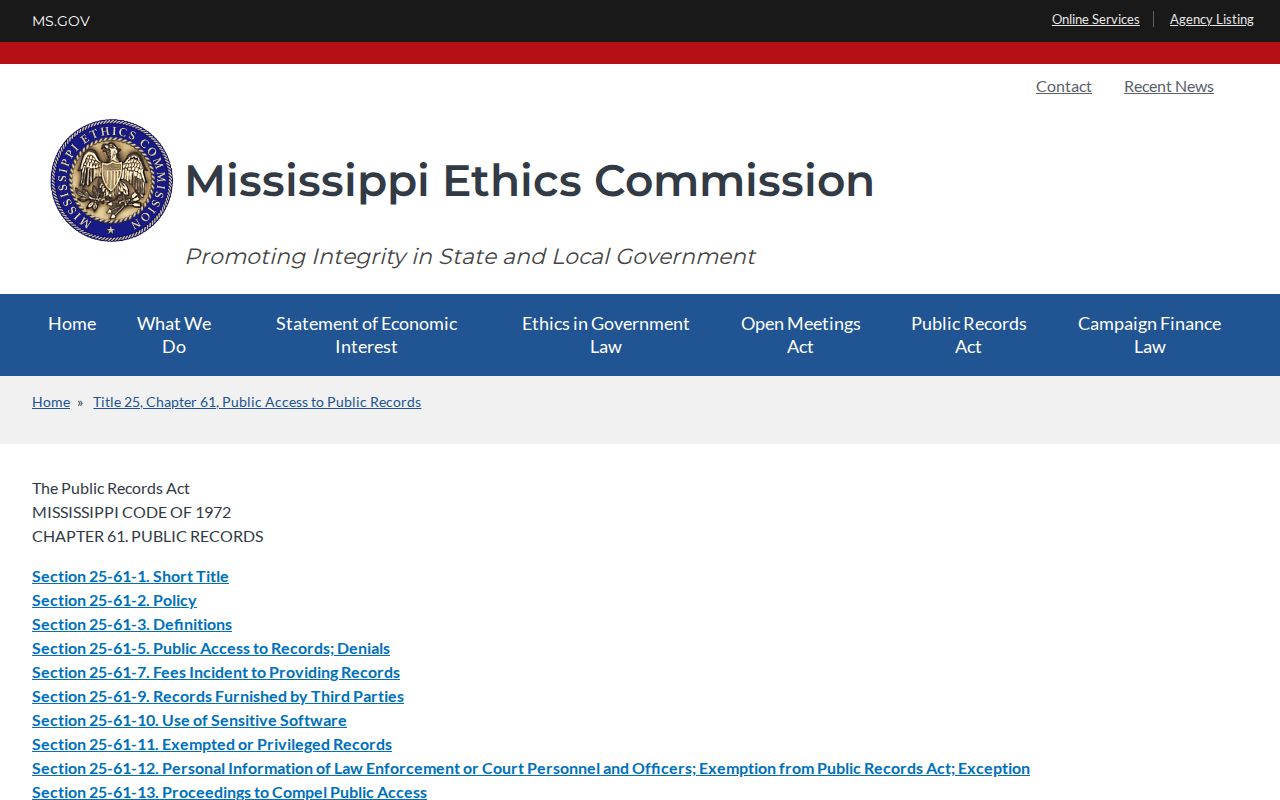
The Mississippi Ethics Commission's Public Records Act page lays out statewide public-record access principles. It also carries complaint information. Court files, though, still answer to court orders, rules, statutes, and confidentiality protections.
Treat any access route as a principle, not a promise. Some court records simply cannot be released in full. The clerk who holds the original can tell you whether you will get a docket-only view, a redacted copy, or a plain copy of the record.
What a Court Record Contains
Read each field in a docket search result as a clue. It is not a verdict. The case number identifies the file itself. The case type tells you which clerk likely holds it. A filed date marks the day the clerk accepted a paper. That may differ from the date of the event behind it. And when an entry says motion, hearing, or notice of appeal, that single line is only a request or a step. Look for the next order or later docket events before drawing any conclusion from it.
| Case number | The identifier to provide to the clerk and use for a narrow electronic search. |
|---|---|
| Party role | A label such as plaintiff, petitioner, defendant, respondent, guardian, appellant, or appellee. |
| Case type | The category that routes the record to Circuit, Chancery, Justice, Municipal, appellate, or federal custody. |
| Filing or entry date | The date activity entered the court record, not a substitute for the actual document. |
| Order or judgment | The court document that explains a ruling or final action when access is permitted. |
| Restriction marker | An indicator such as sealed or expunged that requires compliance with the governing rule or order. |
When you ask for a document, name the docket entry it follows. Say whether you want a plain copy or a certified one. That request gets far better results than asking for everything in a file with layers of restrictions.
Tallahatchie Court Record Rules and Law Sources
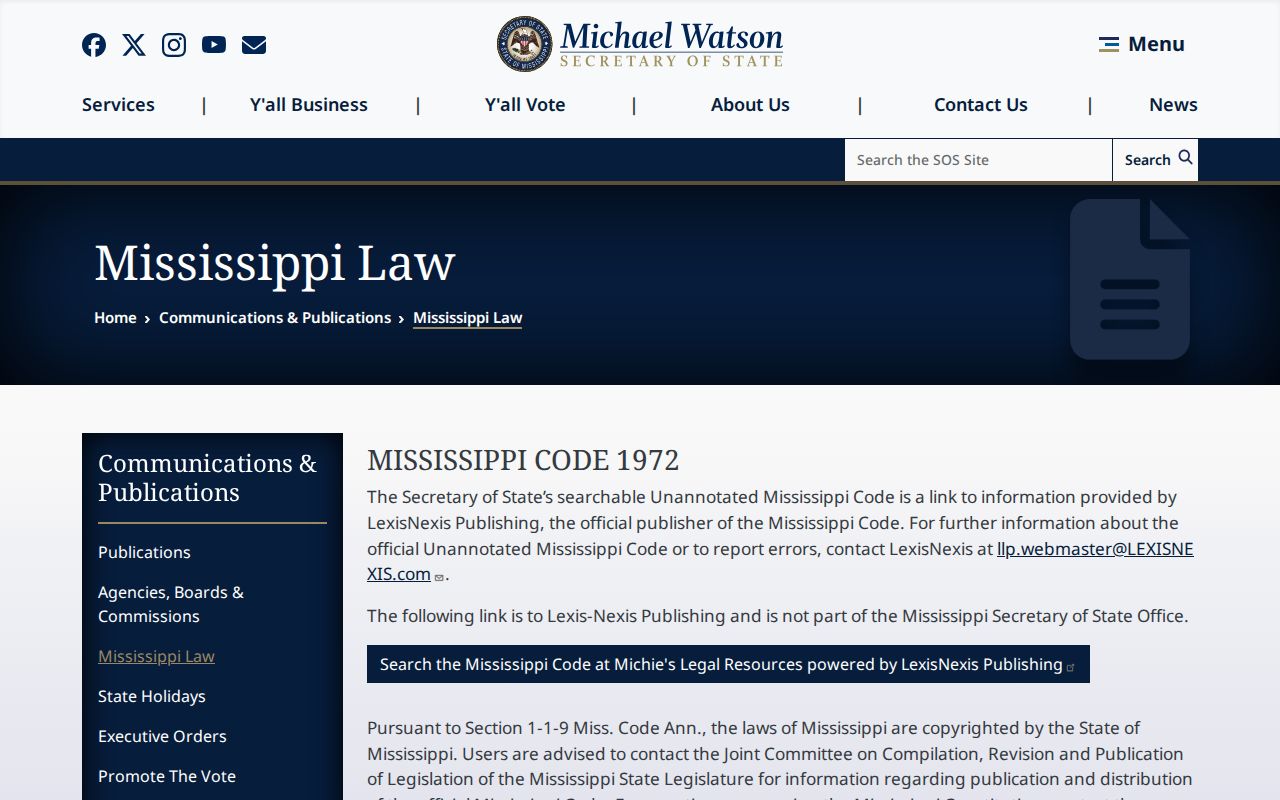
Mississippi's Public Records Act sits in Title 25, Chapter 61 of the Mississippi Code. It builds the framework for public records: inspection, copying, electronic records, exemptions, and enforcement. The judiciary is a separate branch. So court access also turns on court rules and case-specific orders. For current Code text, go straight to the Mississippi Legislature. The Legislature also covers electronic-filing authority and clerk fee provisions. The Secretary of State's Mississippi law information page points readers to official legal resources. It does not point to any unofficial case-summary database.
If a request turns on a specific statute, fee, privacy rule, or sealing provision, work from the current Code and current court rules. An old fee digest or a dated rule PDF will not substitute for confirmation from the clerk. The Mississippi Legislature portal offers the official route for searching the Code.
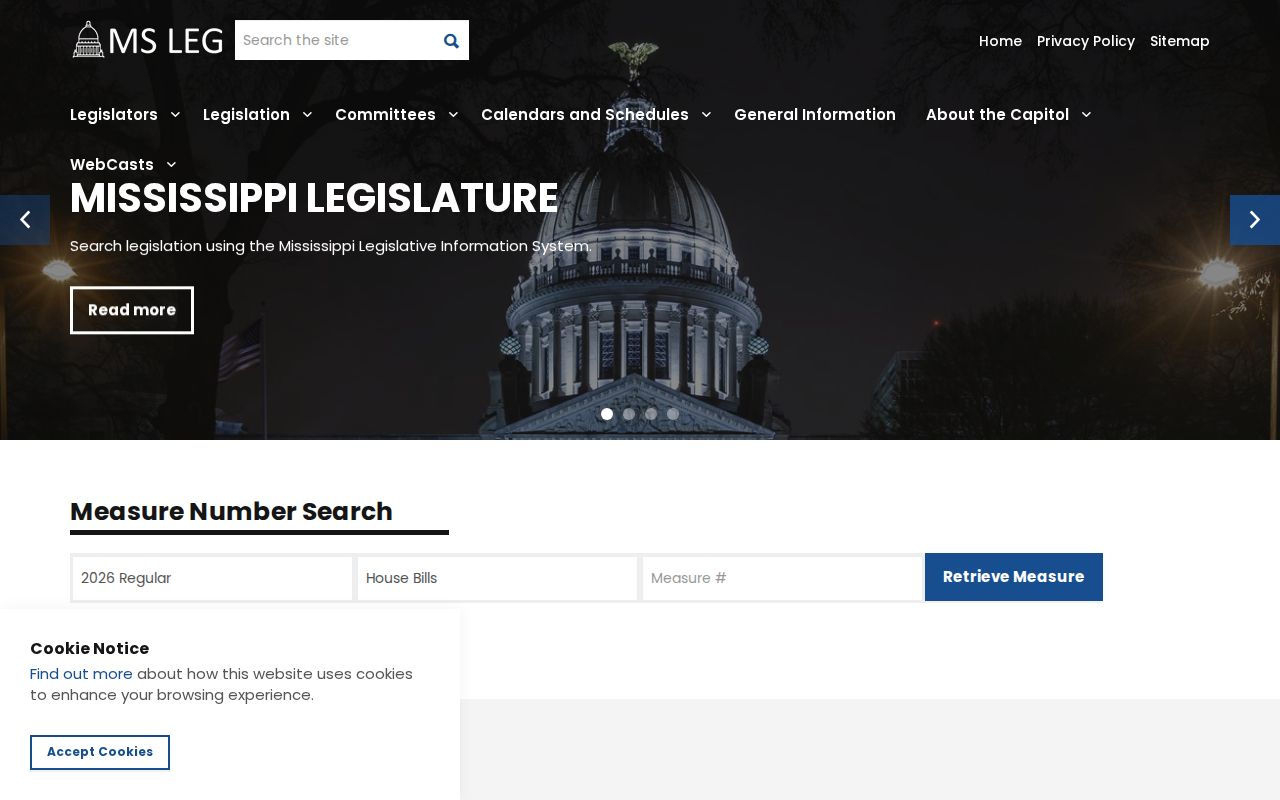
That official route lets you verify a citation yourself. The clerk still controls the practical side: filing, copying, payment, and local access procedure for the particular record.
Certified Copies and Fees
Tallahatchie County posts no current online copy-fee schedule. Never assume a fee from another county or from a portal charge. PAMEC remote access fees are separate. They do not cover what a clerk charges for paper or certified copies. Ask for a written estimate first. It should cover copying, certification, postage, archive retrieval, electronic-media, and payment-processing costs where they apply.
| Service | Research-supported baseline | What to confirm locally |
|---|---|---|
| Circuit certified document | Statutory material lists $1 for each complete filed document, subject to current-Code verification. | Current fee, document scope, and certification procedure. |
| Circuit clerk-made copy | Statutory material lists $1 per page, subject to current-Code verification. | Whether the office uses a different current local charge. |
| Chancery certified document | Digest material lists $1 per complete filed document, subject to current-Code verification. | Exact document and service charge. |
| Chancery clerk-made copy | Digest material lists $0.50 per page, subject to current-Code verification. | Current copy, mailing, and payment requirements. |
| PAMEC access | Research-date terms list $10 annual registration and $0.20 per page. | Live terms and participating-court availability. |
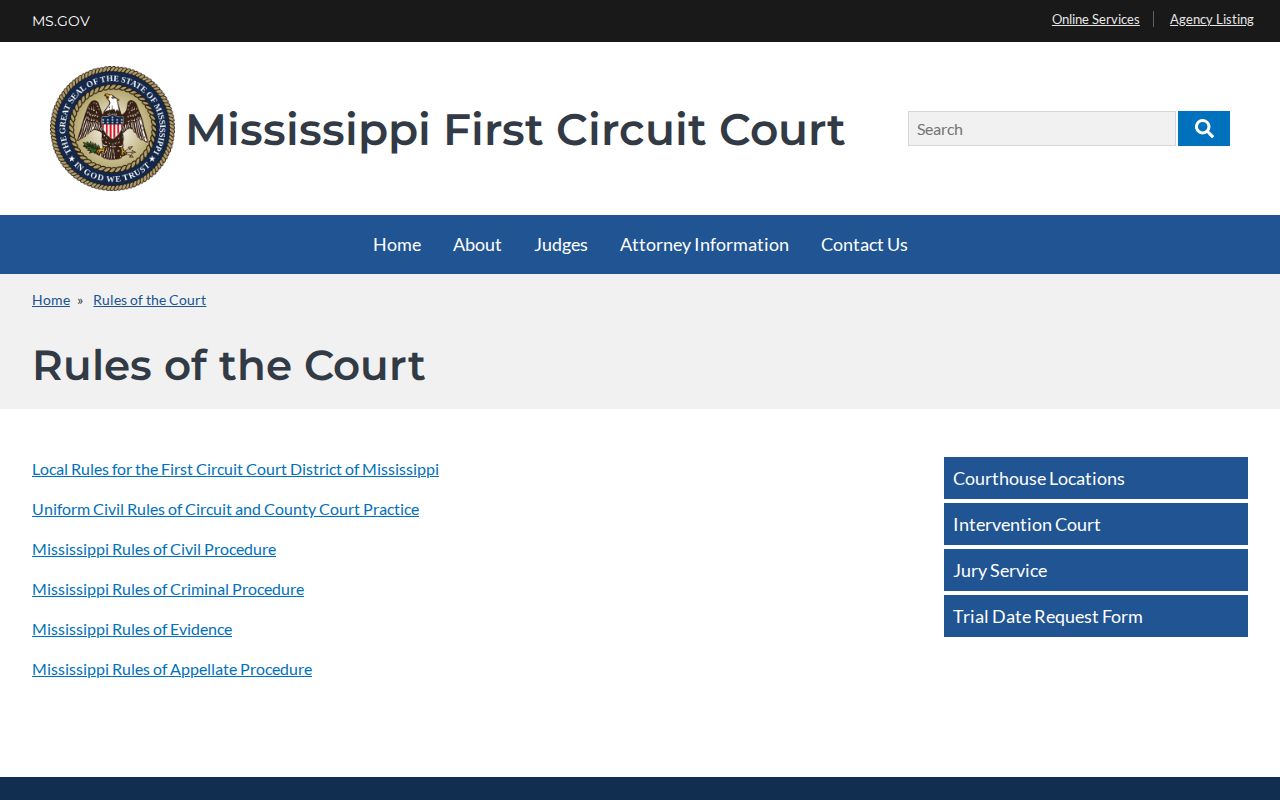
The official Mississippi court rules index lists current rules. Check it before any request involving electronic filing, privacy, or a specific court procedure.
Treat fee information as a checklist to confirm, never a quote from the Tallahatchie clerks. The record itself, its format, certification, and how you pay can all change the request.
Tallahatchie Historic Court Records
Older court material often sits outside any modern electronic search. MDAH lists Tallahatchie Circuit Court Cases boxes 10020 and 10042. There is no index for those older Circuit cases, though other government-record leads appear alongside. If a case pre-dates MEC or the clerk reports a legacy file, ask where it sits. It may be paper, archived, microfilmed, unindexed, or held by MDAH. A “no result” is not the same as “no record.”
Historical research goes better with a court name, an approximate date, and a record category. Add a realistic request the archive can actually search. A city citation may not travel in the same historical stream as a Circuit civil case. The same goes for a Chancery probate file.
Public Access and Sealed Records
Public access has limits. Sealed or expunged cases, Youth Court and juvenile material, adoptions, protected domestic exhibits, medical or financial details, minor identifiers, confidential records, and anything under a protective order may be unavailable. Some of that material may come back redacted instead. A PAMEC account does not override those boundaries. Neither does a docket entry or a Public Records Act request. Never try to slip past a login or a restriction.
Ask for the permitted route. If access is denied, ask the clerk whether a public docket line, redacted copy, or court review is available and what rule, statute, or order supports the restriction. Mississippi Rules of Civil Procedure Rule 5.1 addresses privacy protections in filings, and Youth Court confidentiality provisions require particular care with juvenile information.
This reference on Mississippi’s administrative redaction provision summarizes the categories that require protection, including Social Security numbers, financial-account numbers, dates of birth, and minor information. Verify the current official text before quoting it.
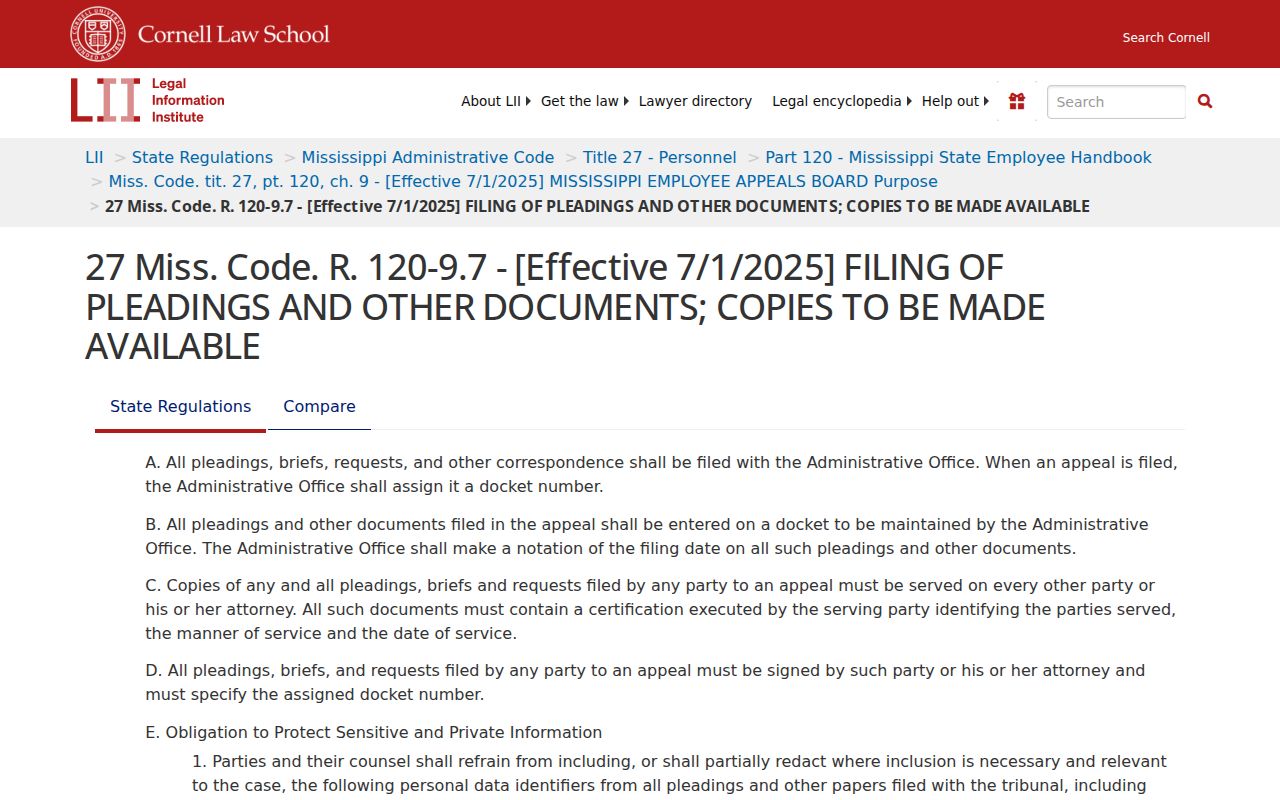
Keep your request narrow. Ask for the public record you need and leave out extra personal identifiers. That approach invites a clear response and respects the limits on the court file.